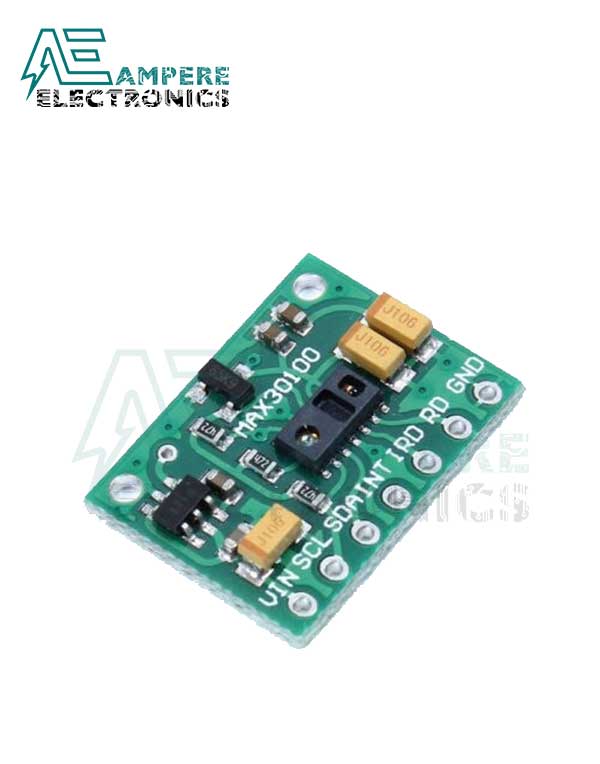
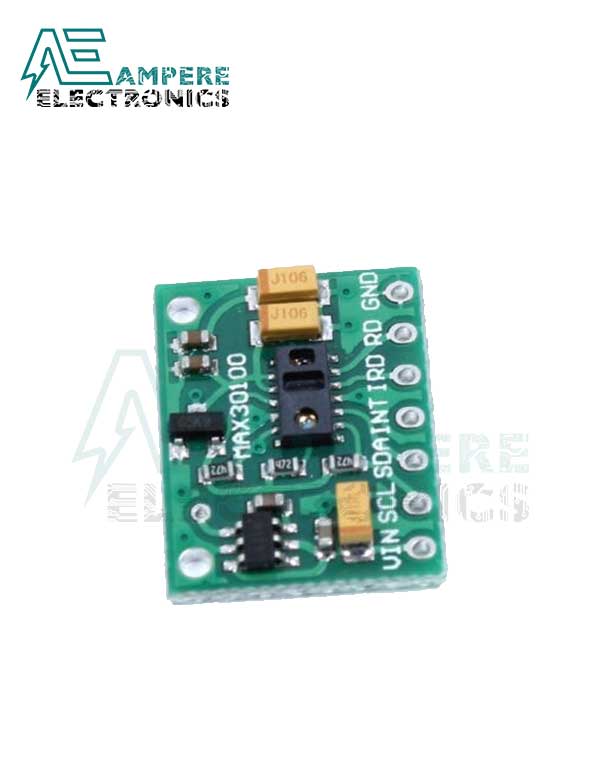
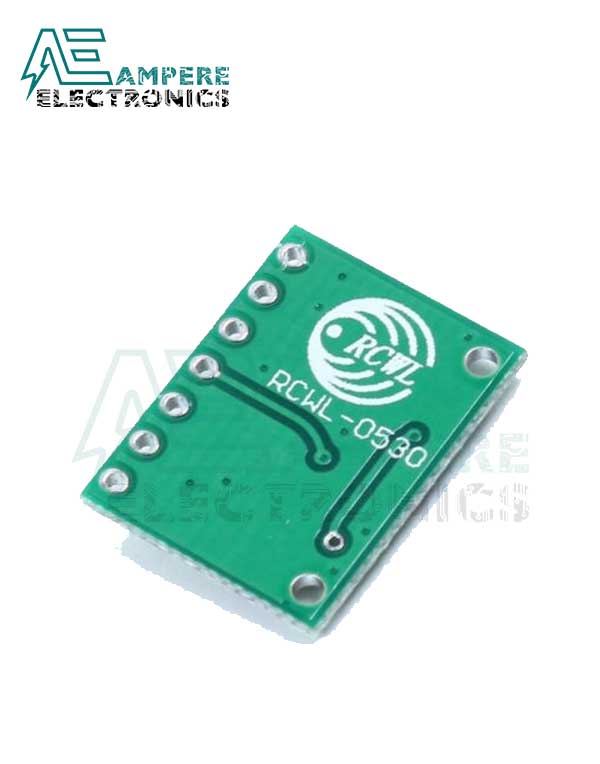


MAX30100 Green Pulse Oximeter and Heart-Rate Sensor Module
Part number MAX30100
Offers
lowest price firstEach offer shows the shop's own title.
- MAX30100 Green Pulse Oximeter and Heart-Rate Sensor Module·checked 21 days agoEGP 90
- MAX30100 Pulse Oximeter and Heart Rate Sensor (Green Version)·checked 25 days agoEGP 91.90
- MAX30100 Pulse Oximeter Heart Rate Sensor Module·Price may be out of date (74 days)EGP 95
- MAX30100 EGC Heart Rate and Oximeter Sensor·checked 18 days agoEGP 150
- MAX30100 Pulse Oximeter and Heart-Rate Sensor Module·checked 12 days agoEGP 250
- MAX30100 EGC Heart Rate and Oximeter Sensor·checked 15 days agoEGP 250
Show 1 out of stock offerHide out of stock offers
- Pulse Oximeter and Heart Rate Sensor (MAX30100)Makers ElectronicsOut of stock·checked 11 days agoEGP 80
Details
FromFrom Ampere Electronics's description
MAX30100 Pulse Oximeter and Heart-Rate Sensor Module It is a multipurpose sensor used for multiple applications. It is a heart rate monitoring ?sensor along with a? pulse oximeter . The sensor comprises two? Light Emitting Diodes , a photodetector, and a series of low noise signal processing devices to detect heart rate and to perform pulse oximetry Features Operating Voltage – 1.8V to 3.3V Input Current – 20mA Integrated Ambient Light Cancellation High Sample Rate Capability Fast Data Output Capability Pin Configuration of MAX30100 Oximeter Module Below is the pin configuration of the MAX30100 module. It is a 7 pin sensor module with an enabled I2C communication protocol to interact with the microcontroller. Pin Type Pin Function VIN Voltage Input SCL I2C – Serial Clock SDA I2C – Serial Data INT Active low interrupt IRD IR LED Cathode and LED Driver Connection Point(Leave floating in the circuit) RD Red LED Cathode and LED Driver Connection Point(Leave floating in the circuit) GND Ground pin Note: There are two module versions of the MAX30100 sensor module. The one which we have showcased is the 7-pin version, whereas there is a 5-pin version as well which does not have IRQ and RD pin. The 5-pin module is considered to be more accurate as the circuitry for the module is on the other side of the sensor. Alternatives for MAX30100 Pulse 3+, Proto Central AFE4490, ROHM BH1792GLC, FSH 7060 Equivalent for MAX30100 MAX30102 Note:? More technical information can be found in the? MAX30100 Datasheet ?linked at the bottom of this page. Working of the MAX30100 Oximeter Working of an oximeter: The sensor consists of a pair of Light-emitting diode which emits monochromatic red light at a wavelength of 660nm and infrared light at a wavelength of 940 nm. These wavelengths are particularly chosen as at this wavelength oxygenated and deoxygenated hemoglobin have very different absorption properties. As shown in the graph below, it can be seen that there is a difference between HbO2(oxygenated Hb) and Hb(deoxygenated Hb) when subjected to these specific wavelengths. Sensor part: There are two parts to the sensor, an emitting diode, and a photoreceiver. As the? photodiode ?emits the light, it falls over the finger which has to be placed steadily. The light emitted gets absorbed by the oxygenated blood and the rest of the light is reflected through the finger and falls over the detector whose output data is then processed and read through a microcontroller. Connecting MAX 30100 Module to a Microcontroller I showed the connections from MAX30100 to the Arduino microcontroller below. The pulse oximeter uses an I2C communication protocol in order to communicate with the microcontroller. The connections are pretty simple and you can easily make your own Ardunio oximeter. Vin is connected to the 3.3V port of Arduino since the operating voltage of the module is 1.8V-3.3V. The ground terminal of the oximeter is connected to the ground of the Arduino. As part of the communication protocol, two pins which are the SCL and SDA are connected to the Arduino?s A5 and A4 pins, respectively. The INT pin on the module is also connected to the microcontroller?s Digital Pin 2 to check if the heartbeat is captured properly. Functional Block and the Circuit Diagram of MAX30100 Module Below is the functional block for the MAX30100 module. The module consists of two LEDs (IR and RED) both of specific wavelengths, along with a photodetector to detect the received light. The output from the photodiode is sent to the analog-to-digital converter from which the digital data is sent from a filter to the digital data register. The data can be collected from the register and can be sent to the microcontroller following the I2C communication protocol. The image above showcases the internal circuitry of the MAX30100 module and can be used as a reference circuit while designing your own custom module. Applications of MAX30100 Here are some of the applications where MAX30100 can be used: Medical Oxygen measurement devices Wearable Devices Fitness Assistant systems 2D Model of MAX30100 Below is the 2D model of the MAX30100 sensor module. It can be followed while designing custom footprints for the sensor. Note: All the dimensions are in millimeters. Datasheet: MAX30100 Datasheet Related Products: SENSORS | MODULES
Read moreShow less
From Micro Ohm's description
If you are wandering to make a machine which is used to detect heart rate and pulse rate. then this sensor Module is Compatible with you. Heart Rate click carries Maxim’s MAX30100 integrated pulse oximetry and a heart-rate sensor. It’s an optical sensor that derives its readings from emitting two wavelengths of light from two LED s – a red and an infrared one – then measuring the absorbance of pulsing blood through a photodetector . This particular LED color combination is optimized for reading the data through the tip of one’s finger. The signal is processed by a low-noise analog signal processing unit and communicated to the target MCU through the mikroBUS I2C interface . Developers of end-user applications should note that the readings can be negatively impacted by excess motion and changes in temperature. Also, too much pressure can constrict capillary blood flow and therefore diminish the reliability of the data. A programmable INT pin is also available. The operates at the 3.3V power supply . Main Applications: Medical Monitoring Devices Fitness Assistant Devices Wearable Devices Note: The module does not come with a berg pin connector. Pin Configuration: SN PINS DEFINITION OF PINS 1 VIN Input voltage (1.8V to 5.5V) 2 SCL IIC-SCL 3 SDA IIC-SDA 4 INT MAX30100INT 5 IRD MAX30100 IR_DRV 6 RD MAX30100 R_DRV 7 GND Ground Circuit Diagram: Specifications and Features: Optical sensor: IR and red LED combined with a photodetector Measures absorbance of pulsing blood I2C interface plus INT pin 3.3V power supply complete pulse oximeter and heart rate sensor solution, simplifies design, integrated LEDs, photo sensor, and high-performance analog front Ultra low power operation increases battery life for wearable devices Advanced functionality improves measurement performance, high SNR provides robust motion artifact resilience integrated ambient, light cancellation high sample rate capability fast data output capability It is an integrated pulse oximetry and heart rate monitor sensor solution. Package Includes: 1 x MAX30100 Pulse Oximeter Heart Rate Sensor Module Working voltage 1.8 ~ 5.5V Shutdown Current 0.7µA Color Green Length (mm) 19 Width (mm) 14.5 Height (mm) 3 Weight (gm) 2 Shipment Weight 0.005 kg Shipment Dimensions 8 × 6 × 4 cm
Read moreShow less
From Most Electronic's description
MAX30100 EGC Oximeter sensor – Heart Rate Sensor – Pulse Sensor Heart Rate click carries Maxim’s MAX30100 integrated pulse oximetry and a heart-rate sensor. It’s an optical sensor that derives its readings from emitting two wavelengths of light from two LEDs – a red and an infrared one – then measuring the absorbance of pulsing blood through a photodetector. This particular LED color combination is optimized for reading the data through the tip of one’s finger. The signal is processed by a low-noise analog signal processing unit and communicated to the target MCU through the mikroBUS I2C interface. Developers of end-user applications should note that the readings can be negatively impacted by excess motion and changes in temperature. Also, too much pressure can constrict capillary blood flow and therefore diminish the reliability of the data. A programmable INT pin is also available. The operates at the 3.3V power supply. QUICK OVERVIEW Optical sensor: IR and red LED combined with a photodetector Measures absorbance of pulsing blood I2C interface plus INT pin Complete pulse oximeter and heart rate sensor solution, simplified design, integrated LEDs, photosensor, and high-performance analog front Ultra-low power operation increases battery life for wearable devices SPECIFICATIONS Working voltage: 1.8 ~ 5.5V Shutdown Current: 0.7 µA Dimensions: 18 x 14 x 3 mm Pin Configuration: VIN Input voltage (1.8V to 5.5V) SCL IIC-SCL SDA IIC-SDA INT MAX30100INT IRD MAX30100 IR_DRV RD MAX30100 R_DRV GND Ground Download IC MAX30100 Datasheet
Read moreShow less
From Most Electronic's description
MAX30100 Pulse Oximeter and Heart Rate Sensor (Green Version) is a high-quality electronic component designed for Arduino, prototyping, and educational electronics. Heart Rate click carries Maxims MAX30100 integrated pulse oximetry and heart-rate sensor. It is an optical sensor that derives its readings from emitting two wavelengths of light from two LEDs – a red and an infrared one – then measuring the absorbance of pulsing blood through a photo detector. SPECIFICATION Type: Biomedical Applications: Developing algorithms for pulse oximetry and heart rate readings through the tip of a finger On-board modules: Maxim’s MAX30100 integrated pulse oximetry and heart-rate sensor Optical sensor: IR and red LED combined with photodetector, Measures absorbance of pulsing blood Key Benefits: Motion artefact resillence, Ambient light cancellation Interface: I2C Input Voltage: 3.3V Compatibility: mikroBUS Click board size: M(42.9 x 25.4 mm) MAX30100 heart rate and pulse oximeter sensor datasheet. It’s perfect for DIY makers, students, and anyone building custom electronic circuits or STEM kits.
Read moreShow less
From Makers Electronics's description
Heart Rate click carries Maxims MAX30100 integrated pulse oximetry and heart-rate sensor. It is an optical sensor that derives its readings from emitting two wavelengths of light from two LEDs – a red and an infrared one – then measuring the absorbance of pulsing blood through a photo detector. SPECIFICATION Type: Biomedical Applications: Developing algorithms for pulse oximetry and heart rate readings through the tip of a finger On-board modules: Maxim’s MAX30100 integrated pulse oximetry and heart-rate sensor Optical sensor: IR and red LED combined with photodetector, Measures absorbance of pulsing blood Key Benefits: Motion artefact resillence, Ambient light cancellation Interface: I2C Input Voltage: 3.3V Compatibility: mikroBUS Click board size: M(42.9 x 25.4 mm) MAX30100 heart rate and pulse oximeter sensor datasheet. PACKAGE INCLUDES 1 x Heart Rate MAX30100 modules Sensor
Read moreShow less
Similar products
 MQ-9 Carbon Monoxide Gas Sensor ModuleEGP 801 shopchecked 19 days ago
 MQ-3 Alcohol Detector Gas Sensor ModuleEGP 801 shopPrice may be out of date (74 days)
 20mm 2.4mhz piezoelectric humidifier, energy conversion plateEGP 801 shopPrice may be out of date (74 days)
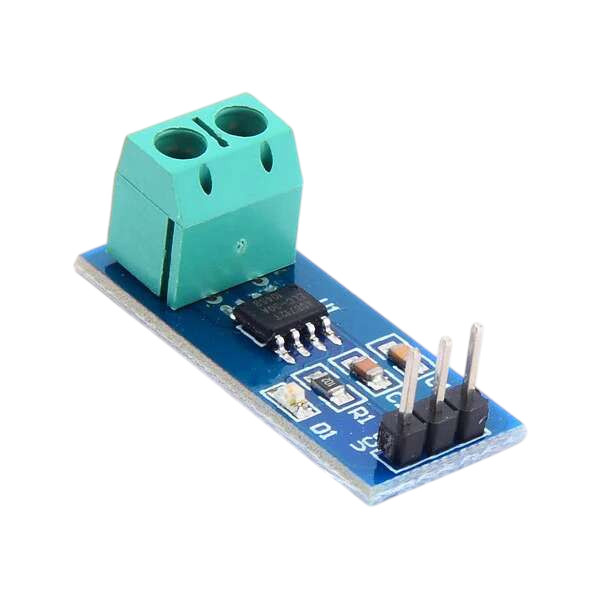 ACS712 Current Sensor Module 30AEGP 80 – 110.994 shopschecked 13 days ago
 MQ-7 CO Carbon Monoxide Coal Gas Sensor ModuleEGP 801 shopPrice may be out of date (74 days)
 MQ 135 Air Quality/Gas Detector Sensor Module For ArduinoEGP 801 shopPrice may be out of date (74 days)
 Load Cell Amplifier - HX711EGP 801 shopchecked 17 days ago
 MQ-7 Carbon Monoxide Sensor ModuleEGP 801 shopchecked 20 days ago