ESP8266 NodeMcu WiFi Programming & Development Kit With CH340
Part number ESP8266
Offers
lowest price firstEach offer shows the shop's own title.
- ESP8266 NodeMcu WiFi Programming & Development Kit With CH340·checked 19 days agoEGP 160
- ESP8266 NodeMCU WiFi Programming Development Kit 30-Pin With CP2102 Type-C·checked 14 days agoEGP 195
- NodeMCU. 30 Pins (ESP8266 WiFi Programming & Development Kit) CP2102·checked 14 days agoEGP 220
Show 2 out of stock offersHide out of stock offers
- NodeMCU (ESP8266 WiFi Programming & Development Kit) CH340Future Electronics EgyptOut of stock·checked 15 days agoEGP 180
- ESP8266 NodeMCU WiFi Programming Development Kit 30-Pin With CH340 Type-CMakers ElectronicsOut of stock·checked 16 days agoEGP 260
Details
FromFrom Makers Electronics's description
ESP8266 NodeMcu WiFi Programming & Development Kit With CH340 The ESP8266 NodeMCU WiFi Programming & Development Kit with CH340 is a powerful, open-source development board tailored for Internet of Things (IoT) applications. Powered by the ESP8266 WiFi module, it offers seamless wireless connectivity through the 802.11 b/g/n standard, enabling the creation of smart, connected devices. The integrated CH340 USB-to-serial converter facilitates easy programming and debugging via a micro USB cable, eliminating the need for external programmers. Compatible with both Arduino IDE and Lua scripting, this board is ideal for hobbyists, students, and professionals looking to prototype or deploy IoT solutions. Its compact, breadboard-friendly design and robust feature set make it a go-to choice for projects ranging from home automation to wireless sensor networks. Features: Besides adding WiFi capability, the main claim to fame for the ESP8266 processor over the AVR processor of the standard Arduino is that it has a larger 4 MB of Flash memory and runs at clock speeds of 80 MHz and can sometimes optionally be overclocked to 160 MHz and therefore has a very fast processing speed. The Digital I/O all support PWM and interrupts. In addition they can be configured to have pull-up or pull-down resistors. Though there are 11 digital I/O pins, 2 are typically reserved for use as the TX/RX lines if serial communications are used which leaves 9 digital I/O. On the down-side, it has only 1 analog input which is probably the most significant limitation for some sensor type applications. That can always be overcome by using an external Analog Mux module like our 16-channel 74HC4067 or our ADS1115 4-channel 16-bit ADC module below if more analog I/O is desired. The module can be powered via the USB port or by using an external 7-12V power supply connected to the VIN pin. The module runs at 3.3V, so keep that in mind when working with I/O. The digital I/O is stated as being 5V tolerant, but the analog input needs to be limited to < 3.3V. The blue on-board LED is connected to D0 (GPIO16) and can be accessed using the LED_BUILTIN constant. The module has a typical ‘Reset’ button as well as a ‘Flash’ button. The Flash button is used when programming using the original NodeMCU firmware. If the module is being used with the Arduino IDE, the Flash button does not need to be used to program the board and it will program just as any Arduino board would. The module comes loaded with the NodeMCU software that accepts the standard AT command set. The module was initially designed primarily to be programmed using Lua which is an interpreted language, but Lua has been mostly abandoned because it takes up a lot of memory and is slow because it is interpreted and more importantly it is generally buggy. It can also be programmed in C using the Arduino IDE and is how the modules are most often used. An example program is shown down below. If a program is download via the IDE, it will overwrite the NodeMCU software or whatever else was loaded before. If that is a problem for what you want to do, the NodeMCU software can always be reloaded. The board uses the CH340 chip for USB communications. If you have any issues with connecting to the board, you may need to download a driver. Just search for Arduino CH340 driver and you will find a number of sources for drivers depending on what Windows or Mac operating system you are using. Specifications: Microcontroller ESP8266 Ten silica 32-bit Serial to USB Converter CH340 Operating Voltage 3.3V Input Voltage (recommended) 7-12V Digital I/O Pins 11 PWM I/O Pins (Shared with Digital I/O) 10 Analog Input Pins 1 (10-bit) DC Current per I/O Pin 12mA (Max) Hardware Serial Ports 1 Flash Memory 4 MBytes Instruction RAM 64 KBytes Data RAM 96 KBytes Clock Speed 80MHz Network IEEE 802.11 b/g/n WiFi Built-in LED Attached to digital pin 13 USB Connector Style Micro-B Female Board Dimensions (PCB) 69 x 53mm Datasheet ESP8266EX Watch a video walkthrough of this process we’ll show you how to install CH340 drivers on multiple operating systems if you need them. The driver should automatically install on most operating systems. However, there is a wide range of operating systems out there. You may need to install drivers the first time you connect the chip to your computer’s USB port or when there are operating system updates. Windows Download the Windows CH340 Driver Unzip the file Run the installer that you unzipped Applications: IoT Projects : Build connected devices like smart lights or weather stations. Wireless Sensor Networks : Collect and transmit data from sensors over WiFi. Home Automation : Create systems to control appliances remotely. Remote Monitoring and Control : Monitor environments or equipment via the internet. Package Includes: 1x ESP8266 NodeMCU WiFi Development Board with CH340
Read moreShow less
From Future Electronics Egypt's description
NodeMCU is an open source development board and firmware based in the widely used ESP8266 -12E WiFi module . It allows you to program the ESP8266 WiFi module with the simple and powerful LUA programming language or Arduino IDE. With just a few lines of code you can establish a WiFi connection and define input/output pins according to your needs exactly like arduino, turning your ESP8266 into a web server and a lot more. It is the WiFi equivalent of ethernet module. Now you have internet of things (iot) real tool. With its USB-TTL , the nodeMCU Dev board supports directly flashing from USB port. It combines features of WIFI accesspoint and station + microcontroller. These features make the NodeMCU extremly powerful tool for Wifi networking. It can be used as access point and/or station, host a webserver or connect to internet to fetch or upload data. Features Finally, programable WiFi module. Arduino-like (software defined) hardware IO. Can be programmed with the simple and powerful Lua programming language or Arduino IDE. USB-TTL included, plug & play. 10 GPIOs D0-D10, PWM functionality, IIC and SPI communication, 1-Wire and ADC A0 etc. all in one board. Wifi networking (can be used as access point and/or station, host a web server), connect to internet to fetch or upload data. Event-driven API for network applications. PCB antenna. The NodeMCU official website. Lua programming language website. Step by step tutorial on using the NodeMCU development board. Tutorial on how to program the ESP8266 ESP-12E using arduino.
Read moreShow less
From Makers Electronics's description
ESP8266 NodeMCU WiFi Programming Development Kit 30-Pin With CP2102 Type-C The ESP8266 NodeMCU WiFi Programming Development Kit is a highly integrated and user-friendly platform designed to simplify the process of developing Internet of Things (IoT) applications. It centers around the powerful ESP8266 microcontroller, which features built-in WiFi capability, allowing devices to connect directly to wireless networks and the internet. This kit utilizes the CP2102 chip as a USB-to-UART bridge, providing a stable and straightforward connection to a computer for programming and serial communication. The inclusion of a modern Type-C USB connector offers convenient and reversible plug orientation for powering the board and uploading code. Housed on a 30-pin development board, it exposes a generous number of the ESP8266’s GPIO pins, making it easy to interface with a wide array of sensors, displays, and other electronic components. This makes it an ideal all-in-one solution for both beginners and experienced developers to rapidly prototype and deploy WiFi-connected projects. Features: Integrated USB-to-UART Bridge via CP2102. Built-in WiFi (802.11 b/g/n) for Internet Connectivity. Simple Programming and PCB Design. Compact 30-pin Development Board Form Factor. Modern Type-C USB Connector for Power and Programming. On-board Voltage Regulator for Stable 3.3V Operation. Easy Access to ESP8266 GPIO Pins for Expanding Functionality. Royalty-Free Virtual COM Port (VCP) Device Drivers. Specifications: Parameter Specification Core Controller: ESP8266 (Tensilica L106 32-bit) USB to UART Bridge: CP2102 USB Connector: Type-C Operating Voltage: 3.3V Digital I/O Pins: 30-pin access (multiple GPIOs) WiFi Standard: 802.11 b/g/n Processor Speed: 80-160 MHz Flash Memory: Attachable (typically 4MB) Serial Communication: UART, SPI, I2C Applications: Upgrade of RS-232 Legacy Devices to USB. Cellular Phone USB Interface Cable. USB Interface Cable. USB to RS-232 Serial Adapter. IoT (Internet of Things) Devices. Smart Home Automation. Networked Sensor Nodes. Wireless Data Logging. Package Contents: 1x ESP8266 NodeMCU WiFi Programming Development Kit 30-Pin With CP2102 Type-C Documents: CP2102 Datasheet ESP8266 Datasheet
Read moreShow less
From Future Electronics Egypt's description
NodeMCU is an open source development board and firmware based in the widely used ESP8266 -12E WIFI module . It allows you to program the ESP8266 WIFI module with the simple and powerful LUA programming language or Arduino IDE. With just a few lines of code you can establish a WIFI connection and define input/output pins according to your needs exactly like Arduino, turning your ESP8266 into a web server and a lot more. It is the WIFI equivalent of ethernet module. Now you have internet of things (iot) real tool. With its USB-TTL , the nodeMCU Dev board supports directly flashing from USB port. It combines features of WIFI access point and station + microcontroller. These features make the NodeMCU extremely powerful tool for WIFI networking. It can be used as access point and/or station, host a webserver or connect to internet to fetch or upload data. Features Finally, programable WIFI module. Arduino-like (software defined) hardware IO. Can be programmed with the simple and powerful Lua programming language or Arduino IDE. USB-TTL included, plug & play. 10 GPIOs D0-D10, PWM functionality, IIC and SPI communication, 1-Wire and ADC A0 etc. all in one board. WIFI networking (can be used as access point and/or station, host a web server), connect to internet to fetch or upload data. Event-driven API for network applications. PCB antenna. The NodeMCU official website. Lua programming language website. Step by step tutorial on using the NodeMCU development board. Tutorial on how to program the ESP8266 ESP-12E using arduino.
Read moreShow less
From Makers Electronics's description
DESCRIPTION The ESP8266 NodeMCU WiFi module is the latest version of this popular module and can be used as a WiFi enabled replacement for an Arduino in many applications. KEY FEATURES OF ESP8266 NODEMCU MODULE: Microcontroller: ESP-8266 32-bit Clock Speed: 80 MHz USB Converter: CH340 USB Connector: Type-C Operating Voltage: 3.3V Flash Memory: 4 MB Digital I/O: 11 Analog Inputs: 1 Communications: Serial, SPI. I2C and 1-Wire via software libraries WiFi: Built-in 802.11 b/g/n Besides adding WiFi capability, the main claim to fame for the ESP8266 processor over the AVR processor of the standard Arduino is that it has a larger 4 MB of Flash memory and runs at clock speeds of 80 MHz and can sometimes optionally be overclocked to 160 MHz and therefore has a very fast processing speed. The Digital I/O all support PWM and interrupts. In addition they can be configured to have pull-up or pull-down resistors. Though there are 11 digital I/O pins, 2 are typically reserved for use as the TX/RX lines if serial communications are used which leaves 9 digital I/O. On the down-side, it has only 1 analog input which is probably the most significant limitation for some sensor type applications. That can always be overcome by using an external Analog Mux module like our 16-channel 74HC4067 or our ADS1115 4-channel 16-bit ADC module below if more analog I/O is desired. The module can be powered via the USB port or by using an external 7-12V power supply connected to the VIN pin. The module runs at 3.3V, so keep that in mind when working with I/O. The digital I/O is stated as being 5V tolerant, but the analog input needs to be limited to < 3.3V. The blue on-board LED is connected to D0 (GPIO16) and can be accessed using the LED_BUILTIN constant. The module has a typical ‘Reset’ button as well as a ‘Flash’ button. The Flash button is used when programming using the original NodeMCU firmware. If the module is being used with the Arduino IDE, the Flash button does not need to be used to program the board and it will program just as any Arduino board would. The module comes loaded with the NodeMCU software that accepts the standard AT command set. The module was initially designed primarily to be programmed using Lua which is an interpreted language, but Lua has been mostly abandoned because it takes up a lot of memory and is slow because it is interpreted and more importantly it is generally buggy. It can also be programmed in C using the Arduino IDE and is how the modules are most often used. An example program is shown down below. If a program is download via the IDE, it will overwrite the NodeMCU software or whatever else was loaded before. If that is a problem for what you want to do, the NodeMCU software can always be reloaded. The board uses the CH340 chip for USB communications. If you have any issues with connecting to the board, you may need to download a driver. Just search for Arduino CH340 driver and you will find a number of sources for drivers depending on what Windows or Mac operating system you are using. TECHNICAL SPECIFICATIONS Microcontroller ESP8266 Tensilica 32-bit Serial to USB Converter CH340 Operating Voltage 3.3V Input Voltage (recommended) 7-12V Digital I/O Pins 11 PWM I/O Pins (Shared with Digital I/O) 10 Analog Input Pins 1 (10-bit) DC Current per I/O Pin 12mA (Max) Hardware Serial Ports 1 Flash Memory 4 MBytes Instruction RAM 64 KBytes Data RAM 96 KBytes Clock Speed 80MHz Network IEEE 802.11 b/g/n WiF USB Connector Style Type-C Board Dimensions (PCB) 69 x 53mm Watch a video walkthrough of this process we’ll show you how to install CH340 drivers on multiple operating systems if you need them. The driver should automatically install on most operating systems. However, there is a wide range of operating systems out there. You may need to install drivers the first time you connect the chip to your computer’s USB port or when there are operating system updates. Windows Download the Windows CH340 Driver Unzip the file Run the installer that you unzipped
Read moreShow less
Similar products
 LCD Shield with KeypadEGP 1601 shopchecked 27 days ago
 Avr project kit + working areaEGP 1601 shopchecked 20 days ago
 ATMEGA 8A Microcontroller, 8-Bit 28-Pin PDIPEGP 1601 shopchecked 12 days ago
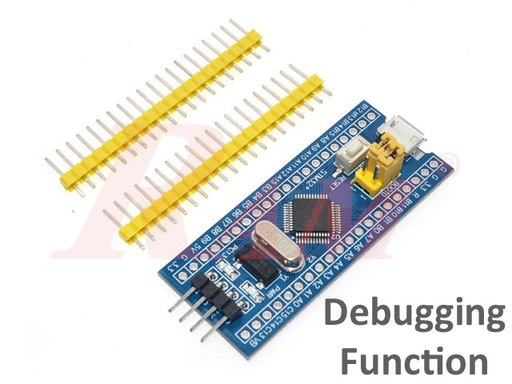
- STM32F103C8T6 ARM STM32 Minimum System Development Board (Debugging Function) Original ChipEGP 160 – 2252 shopschecked 15 days ago
 ASP USB Programmer for AVR MicrocontrollersEGP 1601 shopPrice may be out of date (74 days)
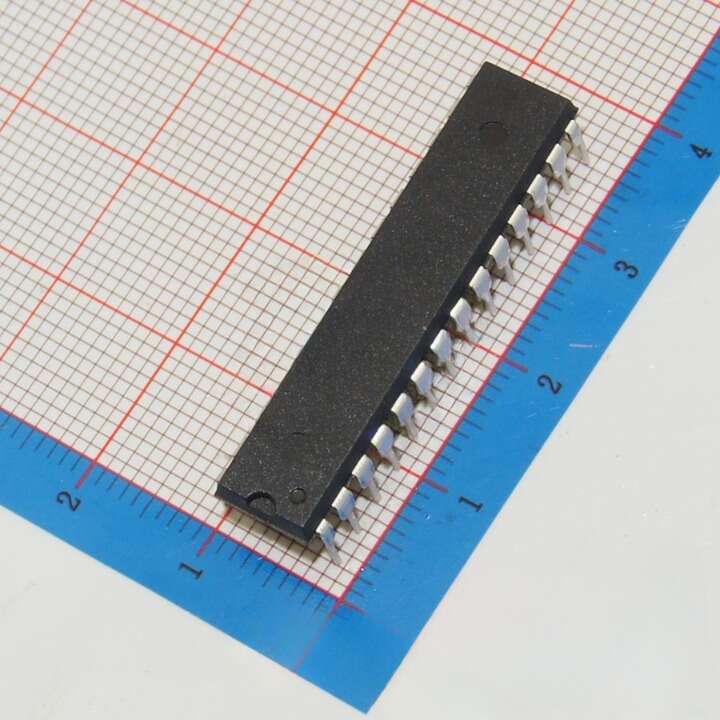 ATMEGA8A-PU 8KB 2.7V~5.5V AVR 1KB 16MHz FLASH 23 DIP-28 AVR Microcontroller UnitEGP 1601 shopchecked 20 days ago
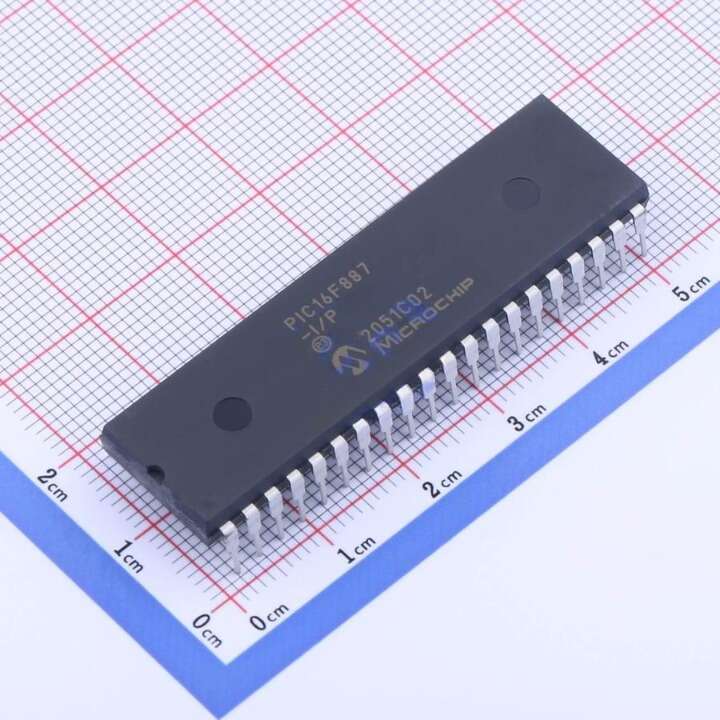 PIC16F887-I/P 20MHz Microcontroller IC PDIP-40EGP 1651 shopchecked 20 days ago
 PIC16F84A-04/P - MICROCHIP, 4MHZ, DIP-18EGP 1651 shopchecked 15 days ago