


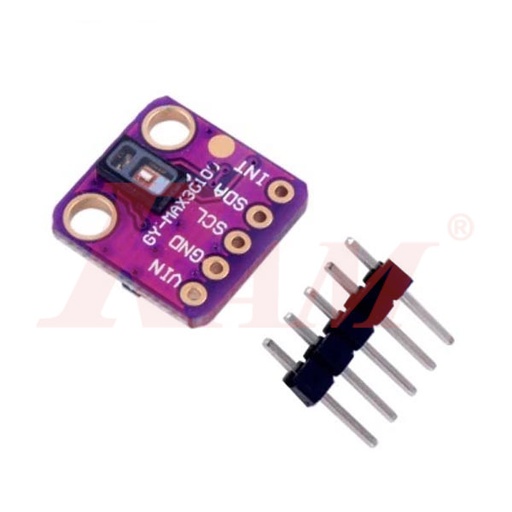


MAX30102 Heart Rate Sensor – Pulse Oximeter (Not Soldered)
Part number MAX30102
- Sold by 5 shops · in stock at 4 · EGP 220 – 520
- 8 similar products, from EGP 220
Offers
lowest price firstEach offer shows the shop's own title.
- MAX30102 Heart Rate Sensor – Pulse Oximeter (Not Soldered)Price may be out of date (76 days)EGP 220
- MAX30102 EGC Heart Rate and Oximeter Sensor (Purple)checked 20 days agoEGP 220.99
- MAX30102 Pulse Oximeter and Heart-Rate Sensor Modulechecked 14 days agoEGP 250
- Keyestudio MAX30102 Heart Rate Sensor Oxygen Pulse Breakout for Arduino original .checked 18 days agoEGP 520
Show 1 out of stock offerHide out of stock offers
- MAX30102 EGC Heart Rate and Oximeter SensorRAM ElectronicsOut of stockchecked 17 days agoEGP 250
What the shops say
From Micro Ohm's listing
Description
MAX30102 Heart Rate Sensor – Pulse Oximeter Module (Purple PCB) ✍️ Introduction Build reliable PPG projects faster with the MAX30102 heart rate sensor —an all-in-one pulse-oximetry front end that integrates red (≈660 nm) + IR (≈880 nm) LEDs , photodiode, low-noise AFE, and an I²C digital interface. A built-in 32-sample FIFO smooths reads, while adjustable LED current (0–50 mA) and pulse width (69–411 µs) help you balance signal quality vs. power. Programmable output rates from 50 to 3200 samples/s give you headroom from low-power wearables to lab demos. 📦 What’s Included MAX30102 pulse-oximetry / heart-rate sensor module (Purple PCB) × 1 ✨ Key Features Integrated PPG engine: red + IR emitters, photodiode, AFE, ADC, and ambient-light cancellation (ALC). ALC rejects up to 200 µA of ambient current for cleaner signals. I²C control + interrupt: standard I²C with INT pin for efficient reads; default slave ID 0b1010111 (0x57) . On-board FIFO: 32-deep buffer reduces MCU servicing overhead during continuous sampling. Tunable performance: 0–50 mA LED current and 69–411 µs pulse widths for HR/SpO₂ optimization. Flexible data rates: 50–3200 sps output data rate via registers. Die temperature readout: on-chip sensor with 0.0625 °C resolution for compensation. 📊 Specifications (from datasheet) Parameter Value / Notes Measurement principle Photoplethysmography (PPG) for HR / SpO₂ basis. LED wavelengths Red ≈ 660 nm , IR ≈ 880 nm . Output data rate 50–3200 sps programmable. LED current range 0–50 mA programmable. Pulse width options 69/118/215/411 µs . FIFO depth 32 samples . I²C address (7-bit) 0x57 (fixed slave ID bits 1010111 ). Supplies 1.8 V core ( VDD ) + separate 3.3 V LED supply ( VLED+ ). Temperature sensor resolution 0.0625 °C . Pins (module-level) VDD, GND, VLED+ , SDA, SCL, INT , PGND; N.C. pads for stability. Power note: Power VDD (1.8 V) first, then LED supply ( VLED+ ); I²C/INT pull-ups may be present even before power is applied. 🧰 Compatibility & Tips Seat the sensing window flush to skin with gentle pressure to reduce motion artifacts. Add pull-ups on SDA/SCL and a 0.1 µF decoupling capacitor near VDD . Start with moderate LED current and pulse width; then tune for your mechanical setup and environment. Apply digital filtering (e.g., band-pass around heart-rate band) and average multiple beats for stable readings. 🎯 Use Cases Wearables & fitness indicators • SpO₂-style demos • Sleep/relaxation monitors • Biomedical signal-processing labs 🛡️ Safety & Handling For development/education , not a medical diagnostic device. Avoid direct viewing of active LEDs at close range. Handle with ESD care; keep the sensor window clean. 📎 Media & Downloads Datasheet – MAX30102 (/Maxim Integrated) . 🚚 Quality, Shipping & Batch Notes Visual inspection for lens alignment and solder integrity before dispatch. Minor PCB/silkscreen variations may occur between batches without affecting function. Anti-static packaging to protect the sensor window. ❓ FAQ Q1: What is the default I²C address? A: 0x57 (slave ID bits 1010111). Q2: Which supplies are required? A: 1.8 V for the IC core ( VDD ) and a separate 3.3 V rail for VLED+ (LEDs). Q3: How do I reduce ambient light issues? A: The device includes ALC (up to ~ 200 µA cancellation). Ensure snug skin contact and shield from external light. ✍️ المقدمة يوفّر مستشعر MAX30102 منظومة PPG متكاملة: LED أحمر (≈660 nm) وIR (≈880 nm) ، ثنائي ضوئي، AFE منخفض الضوضاء، وواجهة I²C . توجد FIFO بعمق 32 عينة لتنعيم القراءة، مع ضبط تيار LED من 0 إلى 50 مA و عرض نبضة 69–411 µs لتحقيق التوازن بين الجودة والاستهلاك. يدعم معدلات بيانات قابلة للبرمجة من 50 إلى 3200 عيّنة/ث . 📦 ما المرفق وحدة مستشعر قياس أكسجة/نبض MAX30102 (لوحة بنفسجية) × 1 ✨ الميزات الرئيسية منظومة PPG متكاملة: مع إلغاء ضوء محيط ALC يصل إلى ~ 200 µA لرفع نسبة الإشارة إلى الضوضاء. تحكّم عبر I²C مع مقاطعة: دبوس INT للقراءات الفعّالة؛ معرّف عبودية افتراضي 0b1010111 (0x57) . ذاكرة FIFO: 32 عينة لتقليل انشغال المتحكّم. أداء قابل للضبط: 0–50 مA لتيار LED و 69–411 µs لعرض النبضة. معدلات بيانات مرنة: 50–3200 ع/ث حسب الإعداد. مستشعر حرارة داخلي: دقّة 0.0625 °م للتعويض الحراري. 📊 المواصفات (طبقًا للداتا شيت) البند القيمة / الملاحظات مبدأ القياس PPG لأساس معدل النبض/SpO₂. أطوال موجية للـLED أحمر ≈ 660 nm ، IR ≈ 880 nm . معدل البيانات 50–3200 ع/ث قابل للبرمجة. مجال تيار LED 0–50 مA . خيارات عرض النبضة 69/118/215/411 µs . عمق الذاكرة FIFO 32 عينة . عنوان I²C (7-بت) 0x57 (بتّات 1010111). التغذية 1.8 فولت للنواة ( VDD ) + 3.3 فولت لـ VLED+ . دقة مستشعر الحرارة 0.0625 °م . أطراف الشريحة/الوحدة VDD، GND، VLED+ ، SDA، SCL، INT ، PGND؛ ووسائد N.C. للتثبيت. ملاحظة تغذية: يُفضّل تغذية VDD (1.8 فولت) أولًا ثم VLED+ ؛ يمكن أن تكون مقاومات السحب لـ I²C/INT فعّالة حتى قبل تطبيق التغذية. 🧰 التوافق والنصائح ضع نافذة الاستشعار مباشرة على الجلد بضغط لطيف لتقليل أثر الحركة. أضِف مقاومات سحب على SDA/SCL ومكثّف 0.1 µF قرب VDD . اضبط تيار LED وعرض النبضة تدريجيًا لتحسين جودة الإشارة. استخدم ترشيحًا رقميًا ومتوسطًا لعدة نبضات لثبات القراءة. 📎 الوسائط والتحميلات الداتا شيت – MAX30102 (/Maxim Integrated). 🛡️ السلامة والمناولة للاستخدام التطويري/التعليمي وليس أداة تشخيصية طبية. تجنّب النظر مباشرةً إلى الـLED أثناء التشغيل. راعِ احتياطات ESD ونظافة نافذة المستشعر. 🚚 الجودة والشحن وملاحظات الدُفعات فحص بصري لمحاذاة العدسة وجودة اللحام. اختلافات طفيفة في ألوان/وسوم اللوحة بين الدُفعات لا تؤثر وظيفيًا. تغليف مضاد للكهرباء الساكنة لحماية نافذة المستشعر. ❓ الأسئلة الشائعة س1: ما عنوان I²C الافتراضي؟ ج: 0x57 (بتّات العبد 1010111). س2: ما الجهود المطلوبة؟ ج: 1.8 فولت للنواة و 3.3 فولت لخط تغذية VLED+ الخاص بالـLED. س3: كيف أتقليل أثر الضوء المحيط؟ ج: يستخدم الجهاز ALC (إلغاء حتى ~ 200 µA ). احرص على تلامس جيد مع الجلد وعزل عن الضوء الخارجي.
Read moreShow less
From Future Electronics Egypt's listing
Description
Max30102 is an improved design version of better accuracy compared to Max 30100 pulse oximeter . The MAX30102 can be used as an oximeter by measuring the oxygen concentration in the blood (SpO2 percentage) and also can be used as heart rate sensor (beats per minute). The device has two LEDs, one emitting red light, another emitting infrared light. For pulse rate, only the infrared light is needed. Both the red light and infrared light is used to measure oxygen levels in the blood. How does the max 30102 pulse oximeter work? When the heart pumps blood, there is an increase in oxygenated blood as a result of having more blood. As the heart relaxes, the volume of oxygenated blood also decreases. By knowing the time between the increase and decrease of oxygenated blood, the pulse rate is determined. It turns out, oxygenated blood absorbs more infrared light and passes more red light while deoxygenated blood absorbs red light and passes more infrared light. This is the main function of the MAX30102: it reads the absorption levels for both light sources and store them in a buffer that can be read via I2C. Features Working voltage: 5V Integrates both complete pulse oximeter and heart rate sensor . Easy-to-use I2C interface. MAX30102 heart rate and pulse oximeter sensor datasheet
Read moreShow less
From Most Electronic's listing
Description
GY-MAX30102 Heart Rate Click Sensor, Optical Heart-Rate Breakout Sensor Module for Arduino, Heart-rate monitor & Pulse Oximeter SpO2 The MAX30102 is an integrated pulse oximetry and heart-rate monitor biosensor module. It includes internal LEDs, photodetectors, optical elements, and low-noise electronics with ambient light rejection. The MAX30102 provides a complete system solution to ease the design-in process for mobile and wearable devices. The MAX30102 operates on a single 1.8V power supply and a separate 5.0V power supply for the internal LEDs. Communication is through a standard I2C-compatible interface. The module can be shut down through software with zero standby current, allowing the power rails to remain powered at all times. Features Integrated cover glass for optimal, reliable performance Work with very low power consumption for mobile devices Programmable sample rate and LED current to save energy The ability to quickly transfer data High sampling rates Solid immunity to movement artifacts High SNR Power supply 3,3V-5V Operating temperature: -40°C to 85°C Download IC MAX30102 Datasheet
Similar products
 CHXINSHE Photoelectric Switch E3JK-R4M1 90 to 250 VAC 4mEGP 2201 shopchecked 13 days ago
 Melexis MLX90217 Geartooth Hall-Effect SensorEGP 2201 shopchecked 17 days ago
 E18-D80NK IR Proximity Sensor (NPN)EGP 2201 shopchecked 13 days ago
 6 in 1 Hand Sweep PIR Induction Sensor Switch Module for Wardobe Cabinet Turn on/off Dimmable Touchless SwitchEGP 2201 shopPrice may be out of date (76 days)
 Electric Linear Solenoid JF-0530B 12Vdc 1A 5NEGP 2201 shopchecked 27 days ago
 Color Sensor Recognition Module TCS3200EGP 220 – 8505 shopschecked 17 days ago
 Electric Linear Solenoid JF-0530B 24Vdc 0.3A 5NEGP 2201 shopchecked 26 days ago
 VL53L0X Time of Flight Sensor (2m Precision Distance Measurements )EGP 220.99 – 4002 shopschecked 19 days ago